Quick Answer
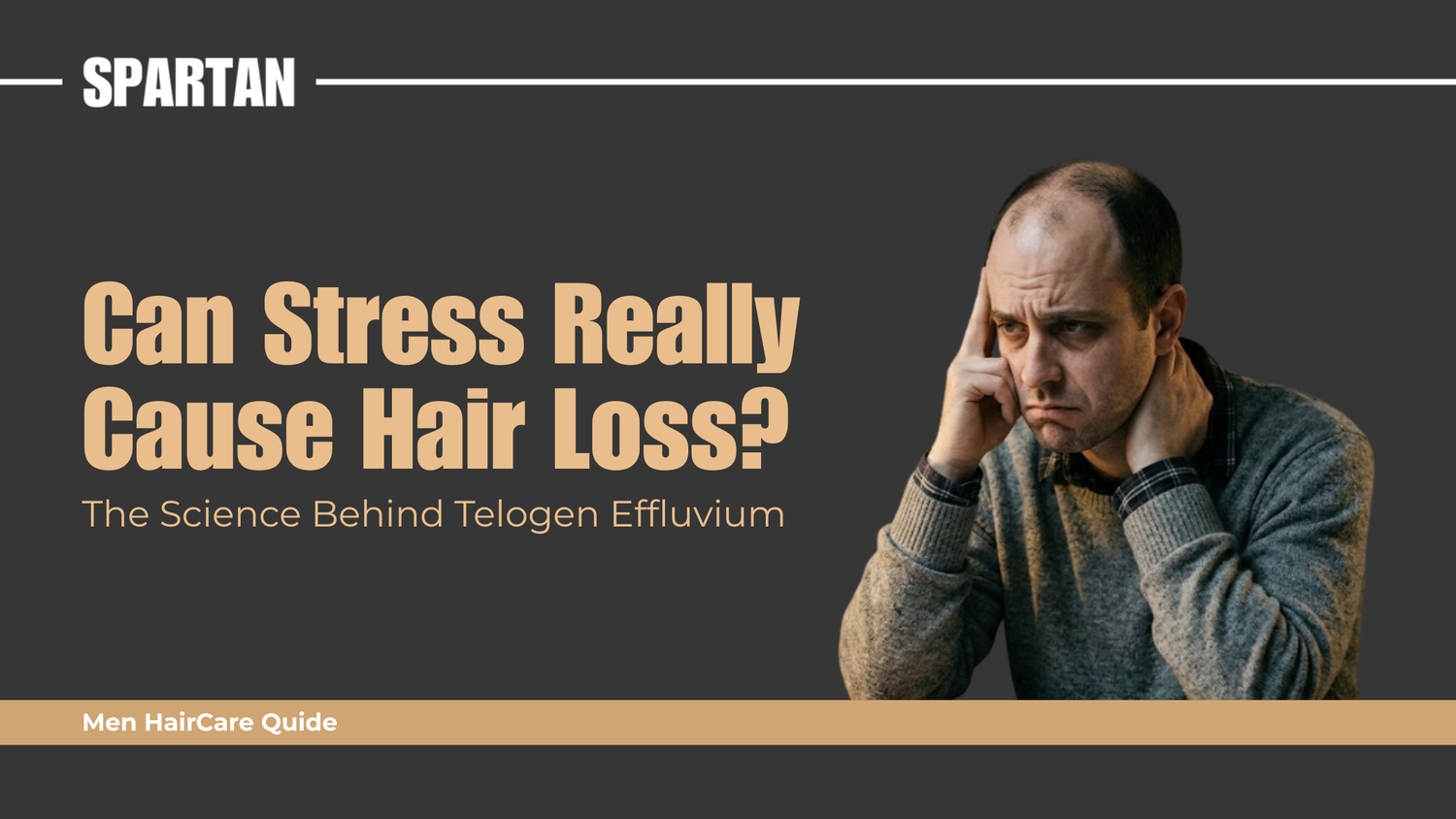
Yes, Stress can cause temporary hair loss through a condition called Telogen Effluvium. Physical or emotional stress can push a large number of hair follicles into the resting phase, causing excessive shedding weeks or months later. Unlike male pattern baldness, stress-related hair loss is often reversible once the underlying trigger is resolved.
Detailed Explanation
Have you ever gone through a stressful period—like changing jobs, losing sleep, recovering from an illness, or dealing with a breakup—and then noticed more hair than usual in the shower?
You're not imagining it.
Stress can affect nearly every system in your body, including your hair.
But here's something that surprises many men:
The hair doesn't usually fall out immediately.
Instead, the effects of stress often appear 2–3 months after the stressful event, making it difficult to connect the two.
This delayed hair shedding is called Telogen Effluvium, and it's one of the most common causes of temporary hair loss in both men and women.
The good news?
Unlike genetic male pattern baldness, stress-related hair loss is often reversible.
In this guide, we'll explain:
- What is Telogen Effluvium
- How stress affects your hair follicles
- The difference between stress hair loss and male pattern baldness
- How long does recovery takes
- What you can do to support healthy hair growth

What Is Telogen Effluvium?
Telogen Effluvium is a temporary form of hair shedding caused by a disruption in the normal hair growth cycle.
Normally, only about 5–15% of your hair follicles are in the shedding (telogen) phase at any given time.
When your body experiences significant stress, many more follicles than normal enter this resting phase at once.
Several weeks later, those hairs begin to fall out together.
This is why you may suddenly notice:
- Hair on your pillow
- More hair in the shower drain
- Hair on your comb or brush
- Increased shedding while shampooing
Although it can look dramatic, the follicles usually remain alive and capable of producing new hair.
Understanding the Hair Growth Cycle
To understand stress-related hair loss, you first need to understand how your hair normally grows.
Every hair follicle continuously cycles through three stages.
1. Anagen (Growth Phase)
This is the active growing stage.
Hair remains here for 2–7 years, depending on genetics.
About 85–90% of your hair is normally in this phase.
2. Catagen (Transition Phase)
This short stage lasts only a few weeks.
Hair growth slows while the follicle prepares for its resting phase.
3. Telogen (Resting & Shedding Phase)
The follicle rests before releasing the old hair.
A new hair then begins growing from the same follicle.
Normally, losing 50–100 hairs per day is completely healthy.
How Stress Disrupts the Hair Cycle
When your body experiences severe stress, it prioritizes survival over hair growth.
Stress hormones signal the body to redirect energy toward essential organs.
Hair growth becomes a lower priority.
As a result:
- More follicles leave the growth phase
- They enter the resting phase early
- Several weeks later, large amounts of hair shed together
This is Telogen Effluvium.
Importantly:
Stress doesn't kill the follicle.
It simply pauses its normal activity.
Can Emotional Stress Really Cause Hair Loss?
Yes.
Many people assume only physical illness causes hair shedding.
But emotional stress can trigger the same biological response.
Examples include:
- Divorce or relationship problems
- Financial pressure
- Work burnout
- Anxiety
- Depression
- Grief
- Chronic sleep deprivation
Your brain doesn't distinguish much between emotional and physical threats.
Both activate stress hormones that can influence hair growth.
Physical Stress Can Trigger Hair Loss Too
Physical stress is another common cause.
Examples include:
- High fever
- Surgery
- Major infections
- Rapid weight loss
- Childbirth
- Serious injuries
- Hospitalization
Many people recovering from illness notice hair shedding months later.
COVID-19, for example, led to a significant increase in temporary Telogen Effluvium cases worldwide.
Hair Loss Triggers
While stress is a major trigger, it's often not the only one.
Other factors that may contribute include:
Poor Nutrition
Low protein, iron, zinc, or Vitamin D can weaken hair growth.
Crash Diets
Rapid calorie restriction often triggers shedding.
Hormonal Changes
Hormonal imbalances affect hair growth cycles.
Certain Medications
Some medications may increase temporary shedding.
Chronic Illness
Underlying health conditions may disrupt normal follicle activity.

Does Stress Cause Male Pattern Baldness?
This is one of the biggest misconceptions.
The answer is:
Not directly.
Male pattern baldness is primarily caused by:
- Genetics
- DHT (Dihydrotestosterone)
Stress doesn't create DHT.
However...
Stress can make existing hair loss appear worse.
For example:
A man already experiencing early male pattern baldness may also develop Telogen Effluvium.
The combined effect can make thinning seem much more severe.
Stress Hair Loss vs Male Pattern Baldness
Understanding the difference is important.
|
Stress Hair Loss |
Male Pattern Baldness |
|
Sudden shedding |
Gradual thinning |
|
Usually affects entire scalp |
Starts at temples or crown |
|
Often reversible |
Progressive without treatment |
|
Triggered by stress or illness |
Caused by DHT and genetics |
|
Hair usually grows back |
Follicles gradually shrink |
Knowing which type you're experiencing helps determine the best approach.
Self-Check Tips
Ask yourself:
- Did hair shedding begin after a stressful event?
- Did it start 2–3 months later?
- Is hair falling evenly across your scalp?
- Has your hairline stayed the same?
- Is your crown not significantly thinner?
If the answer is yes, stress-related shedding may be the cause.
If you're noticing:
- Receding temples
- Crown thinning
- Progressive loss over years
DHT-related hair loss may also be involved.
Can Stress Hair Loss Become Permanent?
In most cases:
No.
Once the stressful trigger is resolved, the follicles usually return to their normal growth cycle.
However, prolonged stress without recovery can contribute to ongoing shedding.
For men already genetically prone to hair loss, chronic stress may accelerate visible thinning by increasing temporary shedding alongside DHT-related changes.
Early Signs of Telogen Effluvium
Many people don't realize they have Telogen Effluvium until they notice significant shedding.
Common signs include:
- Hair coming out in larger amounts while washing
- More hairs on clothing
- Increased hair in the sink
- Reduced hair volume
- Ponytails or hairstyles feeling thinner
- No obvious bald patches
Unlike alopecia areata, Telogen Effluvium usually causes diffuse thinning rather than distinct bald spots.
Why Acting Early Matters
Although Telogen Effluvium often resolves naturally, supporting your scalp during recovery is still important.
Healthy habits can help maintain the best possible environment for new growth.
This includes:
- Eating enough protein
- Managing stress
- Getting quality sleep
- Maintaining good scalp hygiene
- Using gentle hair care products
For men concerned about overall hair health, incorporating a hair growth shampoo for men or a DHT-blocking shampoo into a consistent grooming routine may also help support scalp health, especially if early male pattern hair loss is present alongside stress-related shedding.
How Long Does Stress Hair Loss Last?
One of the biggest questions people ask after noticing excessive shedding is:
"Will my hair grow back?"
In most cases, the answer is yes.
Telogen Effluvium is usually temporary because the hair follicles remain alive. They simply pause their normal growth cycle before starting again.
A Typical Recovery Timeline
Weeks 1–8
-
- The stressful event occurs.
- Hair usually looks normal.
Months 2–4
-
- Hair shedding becomes noticeable.
- You may see more hair in the shower or on your pillow.
Months 3–6
-
- Shedding gradually slows down.
- New hairs begin entering the growth phase.
Months 6–12
-
- Hair density often improves.
- Thickness gradually returns, although growth rates vary from person to person.
Recovery depends on:
-
- The severity of the stress
- Overall health
- Nutrition
- Sleep quality
- Whether another hair loss condition is also present
What Happens If Stress Doesn't Go Away?
Short-term stress usually causes temporary shedding.
However, chronic stress can continue to disrupt the hair growth cycle.
If your body is constantly producing stress hormones, your follicles may never fully return to their normal rhythm.
Long-term stress may contribute to:
- Ongoing shedding
- Slower hair growth
- Increased scalp inflammation
- Poor hair quality
- More noticeable thinning in men already affected by DHT
That's why managing stress is just as important as choosing the right hair care products.
Can Stress Hair Loss Grow Back?
In many cases, Yes.
Unlike male pattern baldness, Telogen Effluvium doesn't permanently damage hair follicles.
Once the trigger is removed, most follicles begin producing hair again.
New hair often appears as:
- Fine baby hairs
- Short regrowth around the hairline
- Gradually increasing density
Patience is essential because hair grows only about ½ inch (1.25 cm) per month.
Visible improvements take time.
What Actually Helps During Recovery?
While there isn't an instant cure for stress-related hair loss, you can support healthier recovery by improving your overall hair care routine.
1. Manage Your Stress
This is the most important step.
Helpful strategies include:
-
- Daily exercise
- Meditation
- Deep breathing
- Spending time outdoors
- Limiting excessive caffeine if it worsens anxiety
- Talking to a mental health professional when needed
Reducing stress gives your body the chance to return to a normal hair growth cycle.
2. Improve Your Sleep
Hair growth largely occurs while your body repairs itself.
Aim for:
-
- 7–9 hours of sleep
- A consistent bedtime
- Reduced screen time before bed
Poor sleep keeps stress hormones elevated and can delay recovery.
3. Eat Enough Protein
Hair is primarily made from keratin, a protein.
A low-protein diet may slow regrowth.
Include foods like:
-
- Eggs
- Fish
- Chicken
- Greek yogurt
- Lentils
- Beans
- Lean meats
4. Support Healthy Scalp Conditions
Even though stress is the trigger, maintaining a healthy scalp helps create a better environment for new growth.
Choose products designed to:
-
- Cleanse without stripping moisture
- Reduce scalp buildup
- Support healthy follicles
Many men incorporate a hair growth shampoo for men or a best hair loss shampoo for men into their routine to maintain scalp health during recovery.
5. Check for Nutritional Deficiencies
If shedding continues, speak with your healthcare provider about testing for deficiencies such as:
-
- Iron
- Vitamin D
- Zinc
- Vitamin B12
Correcting deficiencies may support healthier hair growth.
Should You Use Minoxidil?
Many people ask:
Does Minoxidil Cause Hair Loss?
Minoxidil can cause temporary shedding when first started.
This happens because older hairs are pushed out as follicles transition into a new growth cycle.
If your shedding is purely stress-related, minoxidil may not always be necessary.
However, men experiencing both Telogen Effluvium and male pattern baldness may benefit from discussing treatment options with a healthcare professional.
Can a Hair Growth Shampoo Help?
A shampoo won't eliminate stress.
But it can support the health of your scalp and existing hair while your follicles recover.
Look for products containing ingredients such as:
- Caffeine
- Rosemary oil
- Biotin
- Saw palmetto
- Niacinamide
Many men searching for a DHT blocking shampoo or hair growth shampoo men are looking for products that support healthier scalp conditions while maintaining stronger-looking hair.
When Should You See a Doctor?
Temporary shedding is common.
However, seek professional advice if:
- Hair loss lasts longer than six months.
- Bald patches develop.
- Hair loss is accompanied by pain or severe itching.
- You notice significant scalp redness or scaling.
- Hairline recession continues rapidly.
These signs may indicate another condition beyond Telogen Effluvium.
Vet Insight (Expert Style Section)
Imagine your body as a company during a financial crisis.
When resources become limited, the company cuts non-essential spending first.
Hair growth works similarly.
During periods of severe stress, your body focuses on protecting vital organs like your heart and brain.
Hair growth temporarily becomes a lower priority.
The good news is that once the "crisis" passes, the body usually restores normal hair production.
That's why stress-related hair loss often recovers with time and healthy habits.
Myth vs Fact
Myth: Stress permanently kills hair follicles.
Fact: Telogen Effluvium usually causes temporary shedding, not permanent follicle damage.
Myth: Hair falls out immediately after stress.
Fact: Hair shedding often begins 2–3 months after the stressful event.
Myth: Stress is the leading cause of male baldness.
Fact: Genetics and DHT remain the primary causes of male pattern baldness.
Myth: Washing your hair causes more stress-related hair loss.
Fact: Washing simply releases hairs that were already in the shedding phase.
How TrySPARTAN Supports Men's Hair Care
Recovering from stress-related shedding requires patience and consistency.
While no shampoo can eliminate stress, maintaining a healthy scalp can support the recovery process.
TrySPARTAN Hair Products for Men are designed to help men build a consistent grooming routine by supporting:
- Healthy scalp conditions
- Stronger-looking hair
- Daily hair maintenance
- Scalp cleanliness
- Hair strengthening
Whether you're looking for a best hair loss shampoo for men, a hair growth shampoo for men, or a DHT blocking shampoo, a routine that supports scalp health can complement healthy lifestyle changes during recovery.
Best Solution Summary
If stress is causing your hair loss:
✅ Reduce the source of stress whenever possible.
✅ Prioritize 7–9 hours of quality sleep.
✅ Eat a balanced, protein-rich diet.
✅ Maintain good scalp hygiene.
✅ Use gentle hair care products consistently.
✅ Be patient—hair recovery often takes several months.
Remember:
Hair growth is a gradual biological process, not an overnight transformation.
Frequently Asked Questions
1. Can stress really make your hair fall out?
Yes. Significant emotional or physical stress can trigger Telogen Effluvium, causing temporary hair shedding.
2. How long after stress does hair loss begin?
Most people notice increased shedding 2–3 months after the stressful event.
3. Will my hair grow back after stress?
In most cases, yes. Hair often begins regrowing once the underlying stress has been managed and the normal growth cycle resumes.
4. Is stress hair loss permanent?
Usually not. Telogen Effluvium is considered a temporary form of hair shedding.
5. What is the best way to recover from stress-related hair loss?
Managing stress, improving nutrition, getting enough sleep, maintaining scalp health, and following a consistent hair care routine provide the best support for recovery.
Final Takeaway
Stress is more powerful than many people realize.
It doesn't just affect your mood—it can temporarily interrupt your body's natural hair growth cycle.
The reassuring news is that Telogen Effluvium is usually reversible.
If you've recently experienced a stressful period and are seeing more hair than usual in the shower, don't panic.
Focus on:
- Reducing stress
- Improving sleep
- Eating a balanced diet
- Supporting scalp health
- Staying consistent with your hair care routine
And remember, if your hair loss follows a receding hairline, crown thinning, or a family history of baldness, stress may only be part of the picture. In those cases, addressing DHT-related hair loss alongside healthy lifestyle habits can provide a more complete approach to maintaining stronger, healthier-looking hair.