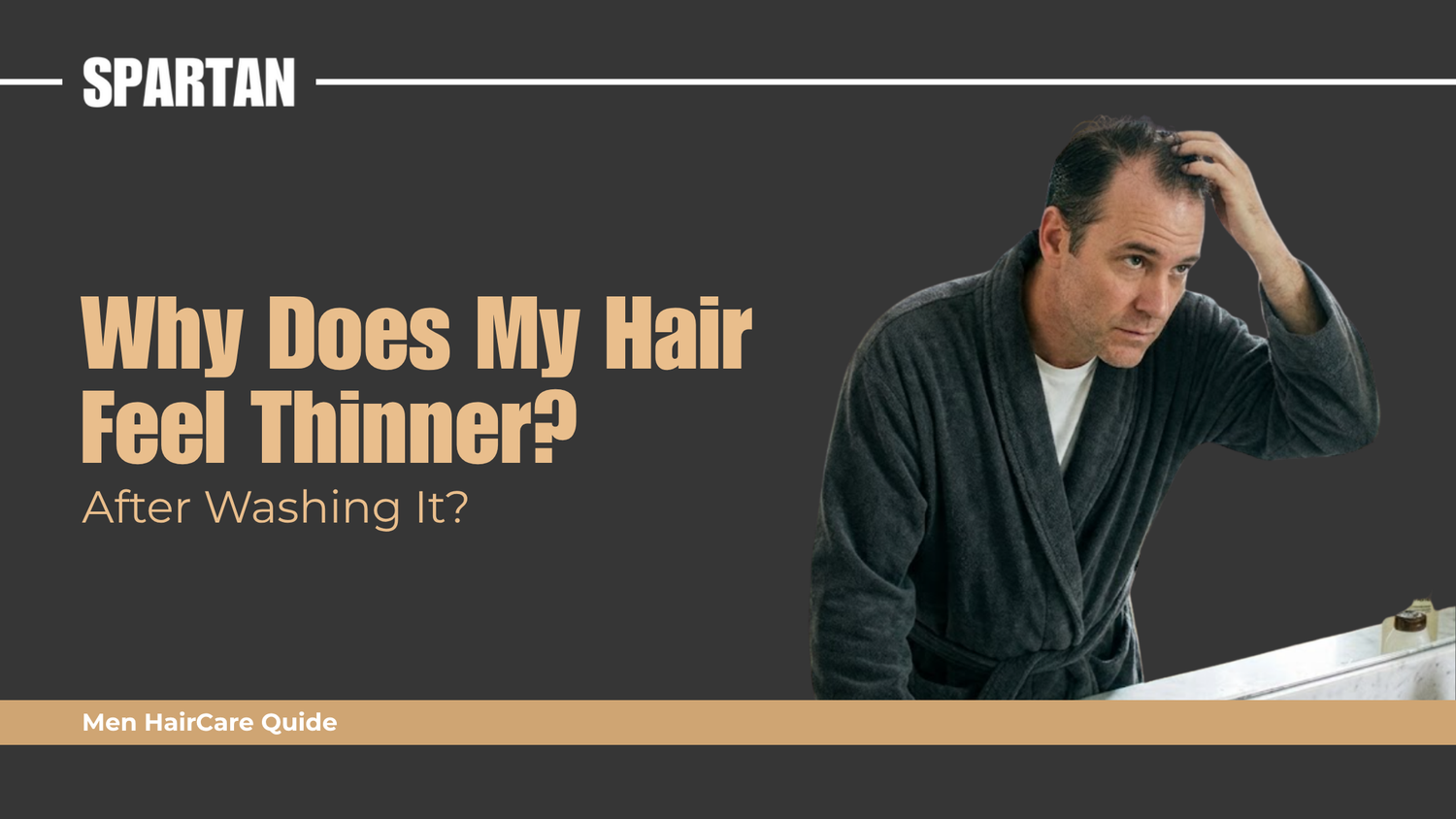
Hair thinning after washing, hair shedding after shampooing, and why my hair looks thinner after washing are common concerns. Hair can temporarily appear thinner after washing because wet strands clump together, making the scalp more visible. Shampooing can also loosen hairs that were already naturally shedding. However, persistent thinning, excessive shedding, or noticeable changes in density may indicate an underlying hair or scalp issue.
Quick Answer
- Wet hair naturally looks flatter and less voluminous.
- Shampooing can release hairs that were already ready to shed.
- Hair breakage can make your overall hair density appear reduced.
- Product buildup and scalp oil can affect how full your hair looks.
- Frequent heat styling and harsh hair care can contribute to breakage.
- Persistent or progressive thinning should be evaluated by a professional.

Why Does Hair Look Thinner When It's Wet?
One of the simplest explanations is water.
When your hair is dry, individual strands have more separation and volume. After washing, water causes strands to group together.
Instead of seeing hundreds of individual strands, you may see several larger sections of hair.
This creates the appearance of:
- Less volume
- More visible scalp
- Flatter roots
- Thinner-looking hair
Once your hair dries, the strands separate again and can look noticeably fuller.
Wet Hair Makes the Scalp More Visible
When hair is wet, it lies closer to your scalp.
This is particularly noticeable if you have:
- Fine hair
- Straight hair
- Naturally low-density hair
- A widening part
- Shorter hair around the hairline
So if your hair looks thinner immediately after washing but returns to its normal appearance once dry, the change may simply be visual rather than actual hair loss.
Why Do I See So Much Hair in the Shower?
This is another reason washing can make hair thinning feel worse.
Hair naturally goes through a growth cycle.
Some hairs are actively growing, while others eventually enter a resting phase and are shed.
These loose hairs can remain tangled among your other strands until you:
- Shampoo
- Brush
- Comb
- Massage your scalp
Washing can therefore make normal shedding more noticeable.
Seeing hair in your hands or shower drain doesn't automatically mean you're experiencing progressive hair loss.
Hair Shedding vs Hair Thinning: What's the Difference?
These terms are often used interchangeably, but they aren't the same.
Hair Shedding
Hair shedding refers to hairs leaving the scalp.
You may notice:
- Hair in your shower
- Hair on your pillow
- Strands on your clothing
- Hair in your brush
Temporary increases in shedding can happen for various reasons.
Hair Thinning
Hair thinning refers to a reduction in overall hair density.
You might notice:
- A wider part
- More visible scalp
- Thinner ponytail
- Reduced density around the temples
- Receding hairline
- Gradual loss of volume
If you're noticing progressive changes rather than simply seeing loose hairs after washing, it's worth investigating further.
Could Shampooing Actually Cause Hair Thinning?
Normal shampooing generally isn't expected to cause permanent hair loss.
However, your hair-care routine can contribute to breakage, which is different from hair loss originating at the follicle.
Aggressive washing or handling may contribute to:
- Hair breakage
- Split ends
- Tangling
- Frizz
- Mechanical damage
The way you wash your hair matters.
Avoid Excessive Scrubbing
You don't need to aggressively scratch or scrub your scalp.
Use your fingertips and gently massage the shampoo into the scalp.
Don't Roughly Towel-Dry
Wet hair is more vulnerable to mechanical damage.
Instead of vigorously rubbing your hair with a towel, gently squeeze out excess water.
Could Your Shampoo Be Making Your Hair Feel Thinner?
Possibly—but often because of texture and volume, rather than actual hair loss.
Some shampoos may leave your hair feeling:
- Dry
- Rough
- Flat
- Tangled
- Less voluminous
If your hair becomes difficult to manage after washing, you may interpret the reduced volume as thinning.
Your shampoo should match your:
- Hair type
- Scalp condition
- Washing frequency
- Styling routine
If you've recently changed shampoo and noticed a dramatic difference in texture or shedding, consider discussing your routine with a dermatologist or qualified hair professional.
Can Hair Conditioner Make Hair Look Thinner?
Conditioner isn't inherently bad for thinning hair.
However, using a heavy conditioner directly at the roots can sometimes make fine hair look flatter.
For people with fine or low-volume hair, applying conditioner primarily to the mid-lengths and ends may help preserve root volume.
The goal is to moisturize the hair without unnecessarily weighing it down.
Does Washing Your Hair Every Day Cause Hair Loss?
Not necessarily.
Washing frequency depends on:
- Scalp oil production
- Hair type
- Lifestyle
- Exercise
- Styling products
- Scalp conditions
Some people need to wash frequently because their scalp becomes oily quickly.
Others can comfortably go several days between washes.
The important distinction is between washing hair and damaging hair.
If you're washing gently with an appropriate shampoo, washing itself isn't automatically responsible for progressive hair thinning.
Why Does My Hair Feel Thinner After Washing and Drying?
If your hair still feels thinner after it dries, there may be another explanation.
Product Buildup
Excess styling products can weigh down the hair and change its texture.
Hair Breakage
Damaged strands can make your hair look less dense and uneven.
Changes in Hair Texture
Hormonal, environmental, or styling-related changes can alter how your hair behaves.
Actual Hair Density Changes
If your hair consistently looks less dense than it used to, especially over several months, you may be experiencing genuine thinning.
Common Causes of Hair Thinning
Hair thinning can have many potential causes.
Genetics
Pattern hair loss is one of the most common causes of progressive thinning.
It can affect both men and women.
Hormonal Changes
Changes in hormones can influence the hair-growth cycle.
Nutritional Deficiencies
Inadequate intake or absorption of certain nutrients can contribute to hair problems.
Stress
Significant physical or emotional stress can sometimes trigger increased shedding.
Illness
Some illnesses can temporarily affect the hair-growth cycle.
Medications
Certain medications may have hair shedding as a potential side effect.
Scalp Conditions
Inflammation, infection, or other scalp conditions can affect hair health.
Because there are so many possible causes, persistent hair loss shouldn't be diagnosed based solely on how much hair you see in the shower.
Does Stress Cause More Hair to Fall Out After Washing?
Stress can affect the hair-growth cycle.
Some people experience increased shedding after significant stress, illness, surgery, major life changes, or other physical stressors.
Interestingly, this type of shedding may not happen immediately.
Hair shedding can become noticeable weeks or months after the triggering event.
If you suddenly notice substantially more hair coming out during washing, consider whether there have been any major changes in your health or life recently.
Can Diet Affect Hair Thickness?
Nutrition plays an important role in overall hair health.
Hair follicles require adequate nutrients to support normal growth.
A balanced diet should generally include adequate:
- Protein
- Iron
- Zinc
- Vitamin D
- B vitamins
- Healthy fats
However, taking supplements without identifying a deficiency isn't necessarily helpful.
If you're experiencing persistent shedding, a healthcare professional can determine whether nutritional testing is appropriate.
What Can You Do If Your Hair Looks Thinner After Washing?
Start with your hair-care routine.
-
Be Gentle When Washing
Massage your scalp gently rather than aggressively scratching. -
Avoid Excessive Heat
Frequent high-heat styling can contribute to hair shaft damage and breakage. -
Detangle Carefully
Use appropriate tools and avoid aggressively pulling through knots. -
Avoid Very Tight Hairstyles
Repeated tension can damage hair and, in some cases, contribute to traction-related hair loss. -
Protect Your Hair From Chemical Damage
Frequent bleaching, relaxing, perming, or other chemical treatments can weaken the hair shaft.
When Should You Be Concerned?
Seeing some loose hair during washing isn't necessarily a reason for concern.
However, consider seeking professional advice if you notice:
- Progressive thinning
- A widening part
- Receding hairline
- Bald patches
- Significant increase in shedding
- Scalp pain or inflammation
- Persistent itching or scaling
- Sudden changes in hair density
Early evaluation can help identify potential causes and appropriate treatment options.
How Can You Tell If Your Hair Is Actually Getting Thinner?
Instead of judging your hair immediately after a shower, compare it when it's dry.
Take photos under similar:
- Lighting
- Hair position
- Camera angle
- Hair length
Compare photographs over several months rather than from one day to another.
This can give you a more accurate picture of whether your hair density is changing.
Hair Thickness vs Hair Density
These two concepts are also different.
Hair Thickness
This refers to the diameter of an individual hair strand.
Fine hair has a smaller diameter than coarse hair.
Hair Density
This refers to how many hairs you have within a particular area of your scalp.
You can have:
Fine but dense hair
or
Coarse but low-density hair.
Both can look very different after washing.
What About Hair Growth Supplements?
Hair supplements are heavily marketed for thicker and healthier hair.
However, supplements aren't a universal solution for hair thinning.
They may be useful when a person has a confirmed nutritional deficiency, but taking excessive amounts of certain nutrients can also be harmful.
If you're considering a hair supplement, especially if you're experiencing significant shedding, discuss it with a healthcare professional.
Myth vs Fact
Myth: Washing your hair causes permanent hair loss.
Fact: Normal washing doesn't automatically cause permanent hair loss. It can simply make naturally shed hairs more visible.
Myth: Seeing lots of hair in the shower means you're going bald.
Fact: Some shedding is normal. The more important question is whether your overall hair density is progressively changing.
Myth: Wet hair is actually thinner than dry hair.
Fact: Wet hair can look thinner because strands clump together and lie closer to the scalp.
Myth: You should stop washing your hair if you're experiencing shedding.
Fact: Avoiding shampoo doesn't necessarily stop hair shedding. Loose hairs will still eventually fall out.
Myth: Hair supplements always make hair thicker.
Fact: Supplements are most useful when they address a genuine nutritional deficiency.
Best Solution Summary
If your hair looks thinner after washing:
1. Check it when dry.
Wet hair naturally looks flatter.
2. Look for long-term changes.
One shower isn't enough to determine whether you're losing density.
3. Review your hair-care routine.
Reduce excessive heat, tension, and rough handling.
4. Pay attention to your scalp.
Persistent itching, scaling, inflammation, or pain deserves attention.
5. Don't self-diagnose persistent hair loss.
A dermatologist can assess your scalp and determine potential causes.
Key Takeaways
- Hair often looks thinner when wet because strands clump together.
- Washing can make naturally shed hairs more noticeable.
- Hair shedding and hair thinning are not the same thing.
- Rough washing and excessive styling can contribute to breakage.
- Persistent thinning may have causes unrelated to shampooing.
- Compare your hair when dry and under consistent conditions.
- Progressive hair loss, bald patches, or significant changes should be evaluated by a healthcare professional.
Frequently Asked Questions
Why does my hair look so thin after washing?
Wet hair clumps together and lies closer to the scalp, reducing visible volume. This can make your scalp appear more noticeable even when your actual hair density hasn't changed.
Why do I lose more hair when I wash it?
Washing can loosen hairs that were already naturally shedding. Those strands may have remained tangled in your hair until shampooing or rinsing.
Does washing your hair every day cause thinning?
Frequent washing doesn't automatically cause permanent hair thinning. Washing frequency should generally be based on your scalp and hair needs. Excessive heat, harsh handling, or damaging styling practices may contribute to breakage.
Should I stop washing my hair if it is thinning?
No. Stopping washing doesn't necessarily stop hair shedding. Instead, use a gentle hair-care routine and investigate persistent or progressive thinning with a dermatologist.
How do I know if my hair is actually thinning?
Look for changes that persist over time, such as a widening part, receding hairline, thinner ponytail, reduced density, or increased scalp visibility when your hair is dry.
Can stress cause hair thinning?
Significant physical or emotional stress can trigger increased hair shedding in some people. If shedding is persistent or substantial, a healthcare professional can help determine the cause.
Final Thoughts
If your hair suddenly looks thinner after washing, don't panic. Wet hair naturally clumps together, lies flatter, and makes the scalp more visible, while shampooing can release hairs that were already ready to shed.
However, if your hair continues to become less dense over time, you're experiencing significant shedding, or you notice bald patches or scalp changes, it's important to look beyond your shampoo. Hair thinning can have many possible causes, and a dermatologist can help identify what's happening.
For everyday hair care, focus on gentle washing, careful detangling, limiting excessive heat and chemical treatments, and maintaining a balanced diet. Most importantly, judge your hair by long-term changes in density, not by how it looks immediately after a shower.